FAQs for Smart D8 Pilot Call 2026

The Smart D8 2026 Pilot Call is now live, inviting innovators from all sectors to pilot projects that can demonstrate population health and wellbeing impacts in real-world environments. Since its inception in 2021, Smart D8 has successfully supported innovators with 19 impactful and innovative pilot projects delivered.

To support prospective applicants, we have released an updated FAQ section to help you navigate the application process. From eligibility criteria and funding details to project expectations and application tips, these FAQs will ensure you have all the information you need to submit a strong proposal.

Submit Your Application

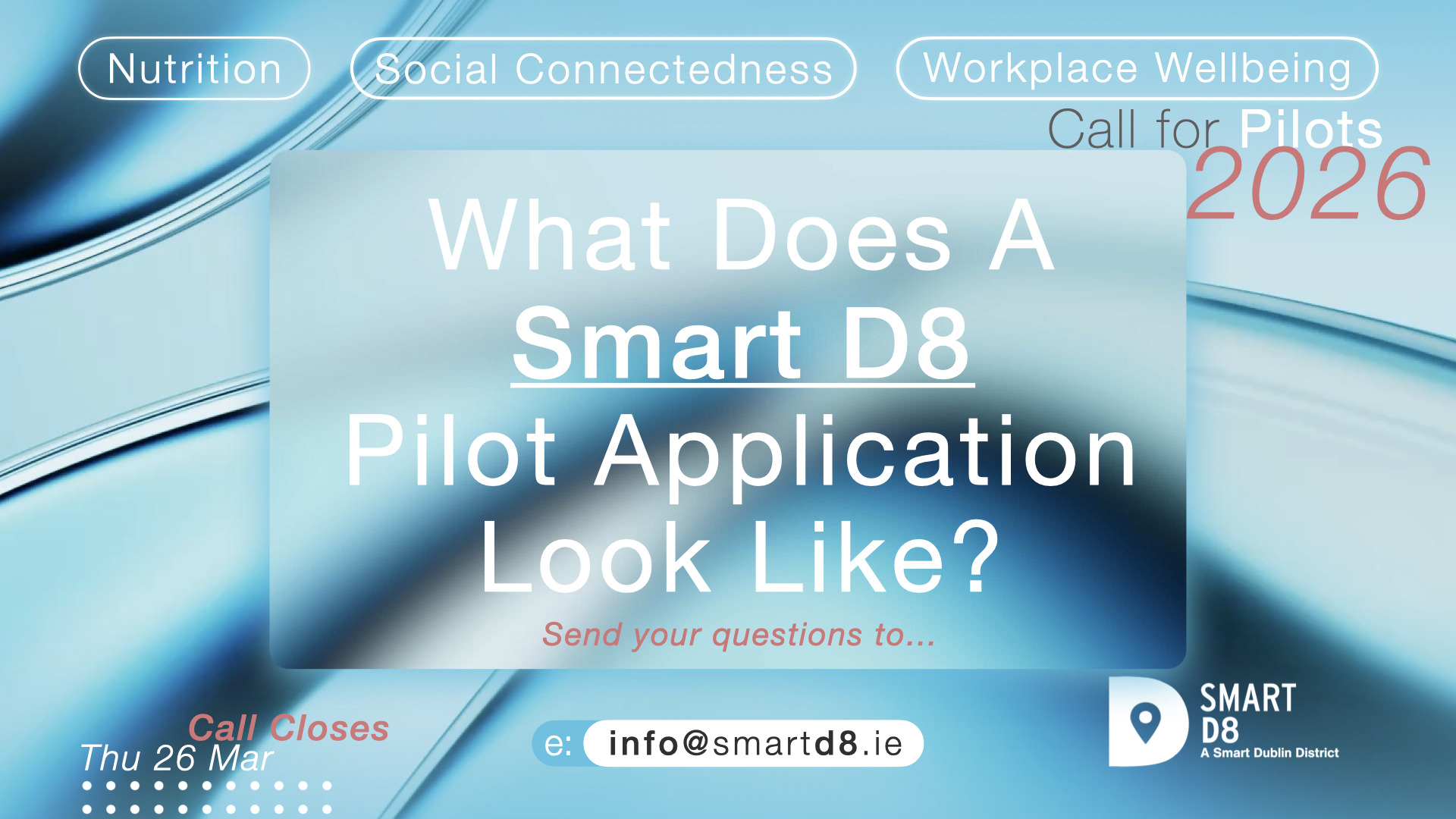
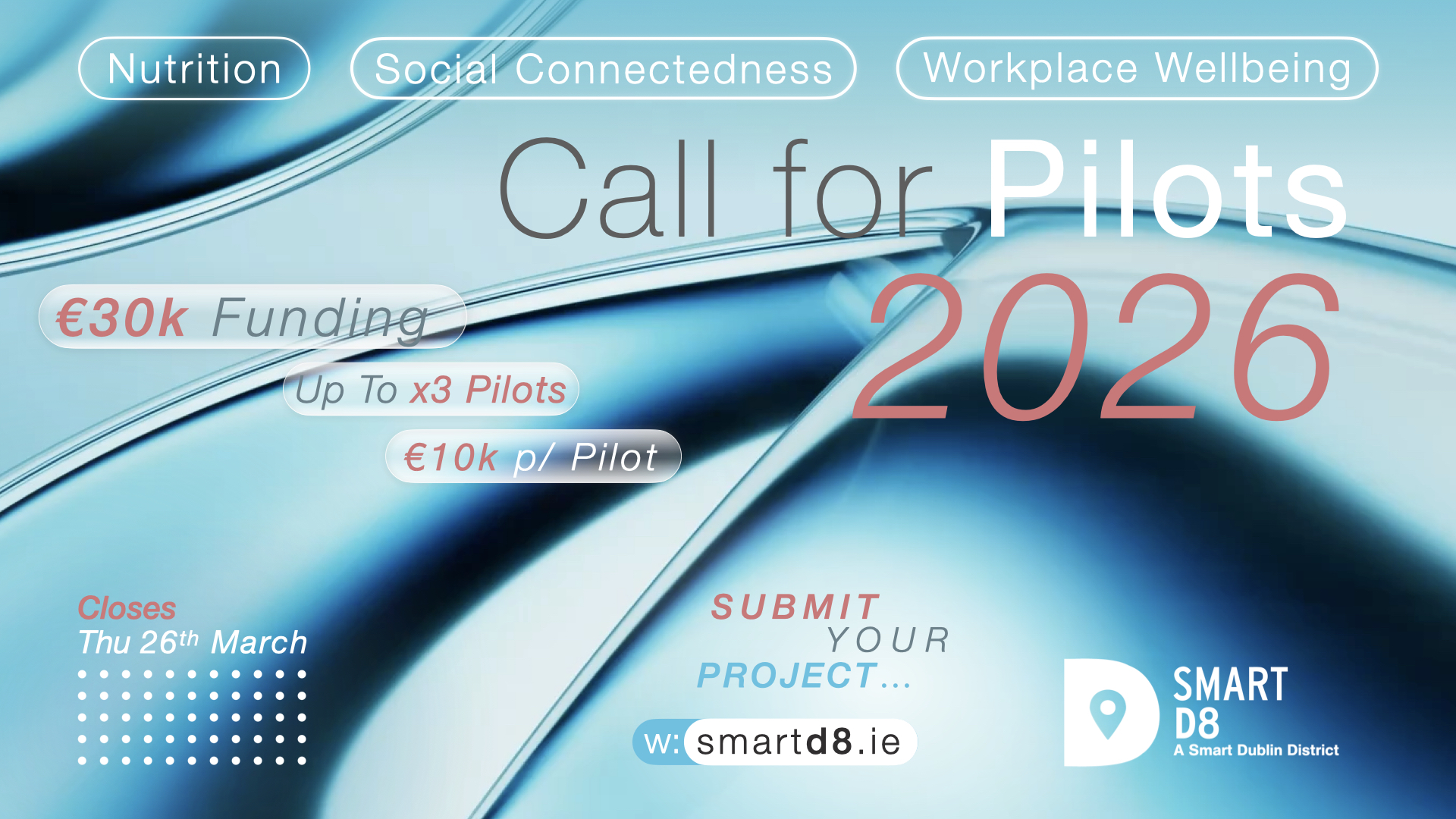
The Smart D8 Pilot Call 2026 is open for submissions until Thursday, March 26th, 2026, at 11 PM (GMT). Up to three pilot proposals will be selected for delivery in 2026, to have the opportunity to trial their innovation in and with a general population to measure their health impacts, gain real-world deployment experience in a real-world setting, and achieve end-user feedback for market-validation of their innovation to scale. Chosen pilots are eligible to receive up to €10,000 in funding to support their delivery as part of their market-validation.

We encourage all applicants to review the FAQs, and visit our website links below for more details on how to apply.

🌍 Read the Press Release: smartd8.ie/opens-doors-to-innovators-2026
🎯 Review the Eligibility Criteria: smartd8.ie/call-for-pilots-2026
💡 Read the FAQs at the Bottom of this Page
✅ Apply Now:
tinyurl.com/SmartD8-Apply-Pilots-2026

Applications are made through the application form (linked above) — and the call itself is focused on three key themes: Nutrition; Social Connectedness; and Workplace Wellbeing. Applicants can apply for more than one theme. If your institution cannot access Google Forms via a Google account, you can access the Pilot Application Template, with email submission instructions, here.

Smart D8 is seeking the next generation of population health and wellbeing innovations; to connect them with real people, demonstrate them in real-world environments, and measure their population-scale impacts and outcomes. If you have a health and wellbeing innovation that is near to market and want to achieve market-validation of your research, enterprise, or initiative, improve citizens’ access to health and wellbeing solutions, and jointly measure its impact on population health in the real world — the Smart D8 pilot call 2026 is now open, and ready for your application.

Frequently Asked Questions (FAQs)

  • 1. What are the focus areas for the Smart D8 2026 Pilot Call?

The Smart D8 2026 Pilot Call is focused on three key themes:
✅ Nutrition
✅ Social Connectedness
✅ Workplace Wellbeing
This call, while broad in its chosen themes, has very specific eligibility criteria, which is also available with examples here.

  • 2. What are the benefits of doing a Smart D8 Pilot?

Selected pilots will have the opportunity to market-validate their innovation in a general population with real people, achieve end-user feedback while demonstrating measurable local health and wellbeing impacts, and gain real-world deployment experience in a real-world environment/setting.

  • 3. Is there a specific cohort that my population health innovation should engage?

Smart D8 prioritises innovations that can engage the general population of Dublin 8. As a population health demonstrator, it seeks innovations that engage a general population to demonstrate population-scale impacts and outcomes.

  • 4. Does the pilot have to engage Dublin 8?

Yes. Smart D8 is focused on the 45,000 target population of the Dublin 8 region. Applicants must demonstrate a clear engagement plan within the Dublin 8 locality for the duration of the pilot as part of their application, and enabled by collaboration with Smart D8 partners and networks. The area provides a wide and diverse population group across age, gender, educational attainment, access to public and private services, etc. – statistically representative of larger populations; enabling innovations and their health/wellbeing impacts to scale.

  • 5. Who are the partners involved in the Smart D8 consortium initiative?

In 2020 Smart D8 purposefully established a unique range and diversity of partners in the consortium. Starting with healthcare providers, the consortium also has representation from municipal, governmental, enterprise, academic and creative stakeholders. The consortium represents a broad perspective on how people live and work, how they access services, travel, and consume public and private facilities and services.
Smart D8 is led by The Digital Hub Development Agency, Dublin City Council, St. James’s Hospital and Smart Dublin. They are joined by Tyndall National Institute, St Patrick’s Mental Health Services, Trinity College Dublin, Trinity Translational Medicine Institute, National College of Art & Design, the Guinness Enterprise Centre, Health Innovation Hub Ireland and the HSE in this unique collaborative initiative.

  • 6. How long do pilot projects run, and who manages them?

Pilots should be ready to deploy with end-users in a general population and should be in a position to measure impacts within a maximum six-month timeframe. Selected pilots must self-manage their project’s implementation, stakeholder engagement, and impact measurement. Smart D8 supports through funding, marketing and promotion, and any additional championing partners to help facilitate access to end-users and guidance on their development.

  • 7. What kind of impact is expected from these pilots?

The Smart D8 2026 Pilot Call prioritises innovations that can demonstrate engagement with higher numbers of citizens for population-scale impacts and outcomes. Projects should aim for meaningful engagement and measurable impact in Dublin 8 with an ability to scale.

  • 8. How do I know what the real-world community setting you’re referring to is, and what their main challenges are so I can address them in my proposal?

Smart D8 can provide links to relevant surveys or reports, such as: Smart D8 community survey from 2020, South Inner City Community Development Association (SICCDA; now ‘The Liberties Community Project’), or Sláintecare Healthy Communities. Additionally, Smart D8 has connections with 34 organisations (e.g. Foróige, The Liberties Community Project), 18 schools (e.g. St. Brigid’s, St. Enda’s), and 3 colleges/adult education services (e.g. Inchicore College of Further Education) in Dublin 8 to support pilots’ meaningful citizen engagement in the Dublin 8 catchment.

  • 9. By ‘health’, do you mean ‘healthcare’?

Smart D8 is developing a broad approach to population health and wellbeing, which encompasses illness prevention as well as treatment in the community. It operates at the ‘interface’ of healthcare by engaging citizens in the wider general population of Dublin 8. Smart D8 is inspired by ‘blue zones’ research – and seeks to demonstrate and validate population health impacts for environmental and behavioural change at community scale (preventative). Smart D8 therefore seeks population health innovations in the broadest sense including, but not limited to: habits; lifestyles; behaviours, environments, nutrition; education; movement; mental wellbeing; etc.

  • 10. Can international applicants apply, or is the open call limited to Ireland-based entities?

The Smart D8 Pilot Call focuses on solutions that can be trialed within the Dublin 8 area. While international organisations can apply, they must demonstrate a clear engagement plan within the Dublin 8 locality, and can be enabled by collaboration with Smart D8 partners.

  • 11. Can I apply as an individual?

Pilot applicants can be either an individual or a team. However, pilot applications still require an organisation to administer your pilot delivery, so that organisational agreements can be made with Smart D8, a Data Protection Impact Assessment (DPIA) can be enabled, and to receive funding for your pilot.

  • 12. Do proposals need to emphasise technology?

The pilot call is challenge-based, not technology led. While proposals may include a technology component, the emphasis of a Smart D8 pilot is on innovative content and technologies that are ready to engage citizens, in a general population (non-clinical), and demonstrate measurable impacts on population health and wellbeing in real-world settings. Innovations that can demonstrate engagement with higher numbers of citizens (‘population’ health) will be prioritised for population-scale impacts and outcomes.

  • 13. Will Smart D8 develop the technology for us?

No. Smart D8 is a matchmaker, to connect innovations ready for deployment with end-users in real-world environments and measure their health impacts. Smart D8 does not develop technology for pilots, and cannot matchmake innovations with end-users that are not ready for end-user engagement.

  • 14. Do projects need to be at a specific stage of development (e.g. prototype vs. fully developed solution)?

Projects should be at a stage where they are ready for real-world testing with end-users. While early-stage pilots and prototypes are welcome, innovations must be developed enough to conduct meaningful engagement and evaluation with citizens from the pilot start, and within the pilot timeframe (up to a maximum of 6 months), and demonstrate measurable impacts on social and economic determinants of health.

  • 15. Can a single organisation submit multiple applications for different projects?

Yes, organisations may submit more than one application for more than one strand/theme. However, each eligible application will be evaluated separately, and preference may be given to diverse projects that align best with the current themes.

  • 16. Are there any considerations for the types of innovations that can be piloted?

Project-specific considerations (e.g. regulatory approval) are on a project-by-project basis, and the responsibility of the applicant/pilot owner. Approvals necessary for any applicant’s pilot delivery must already be in place at the time of submission. Successful applicants will be expected to complete a Data Protection Impact Assessment (DPIA) form as part of their pilot delivery.

  • 17. Does Smart D8 take an equity in my piloted innovation?

Smart D8 does not take equity in pilot projects, and Intellectual property (IP) is retained by the pilot owner/s. Smart D8 seeks to support their citizen engagement, address unmet community-identified needs, and market-validate their population health impacts in a real-world setting with an ability to scale.

  • 18.  Is there funding available?

Selected pilots are eligible to receive funding support of up to €10,000 incl. VAT to support their delivery as part of their market-validation.

  • 19. Is co-funding required, or can projects be fully supported by Smart D8?

Co-funding is not compulsory for project proposals. While successful applicants are eligible for Smart D8 pilot resourcing of up to €10,000 incl. VAT, any other resources necessary for pilot delivery must already be in place at the time of submission.

  • 20. Is funding the main purpose of the Smart D8 Pilot Call?

No. Smart D8 is a population health demonstrator; to connect innovative content and technologies with an ability to scale, with citizens and, together, demonstrate their measurable impacts on population health. While some funding is available to support pilots during their pilot timeline, the main purpose of the Smart D8 pilot call, from an applicant’s perspective, should be to achieve market-validation for their innovation with a general population and in a real-world environment — to scale their innovation and population health and wellbeing impacts with it.

  • 21. What is the role of blue zones in the 2026 Call?

Smart D8 is inspired by blue zones — geographic regions known for exceptional longevity and wellbeing. Whether related to habits, lifestyles, or individual and community practices, Smart D8 welcomes applications that speak to the health and wellbeing of an individual living in a community with the possibility to scale to a region, nationally and ultimately internationally.

  • 22. Will Smart D8 measure the health impacts for our project?

While Smart D8 can input on pilot development and impact measures, successful applicants are expected to measure their health impacts for their pilot and have a clear outline of success criteria at the time their application is submitted.

  • 23. I want to work with Smart D8 partners. Can this be done after I apply?

As a consortium initiative, Smart D8 is a partnership of 12 partner organisations. While the Smart D8 partnership may champion pilots to help facilitate their access to end-users and input on their development, key collaborations necessary for their pilot delivery, or specific settings critical for their implementation, must already be in place at the time of submission. Individual organisations can be contacted by the applicant directly in advance of applying.

  • 24. Can Smart D8 procure services on behalf of my pilot?

Selected pilots are eligible to receive up to €10,000 (incl. VAT if applicable). While Smart D8 may be able to support through in-kind expertise or venues for some pilot activities, it does not procure services on behalf of the pilot. Pilot applicants must use the pilot funding to resource their pilot delivery and any associated services or expenses.

  • 25. My institution requires ethics approval for my pilot. Can Smart D8 help me with this?

Any approvals required by applicants for their pilot is the responsibility of the applicant. Smart D8 does not do this on applicants’ behalf for their application, and any partnerships, resources or approvals necessary for pilot delivery must be in place at the time of the application submission.

  • 26. I am awaiting ethics approval for a research part of my project proposal. Can I apply?

Any resources, collaborations or approvals necessary for pilot applicants to deliver their project must already be in place at the time of submission.

  • 27. Are there any surveys or reports available relevant to the Dublin 8 area?

Yes. Smart D8 can provide links to relevant surveys or reports, such as: results from the Smart D8 community survey in 2020, as well as others such as South Inner City Community Development Association (SICCDA; now known as ‘The Liberties Community Project’), or Sláintecare Healthy Communities.

  • 28. What are the eligibility criteria?

The eligibility criteria are available on the Smart D8 website, at: www.smartd8.ie

  • 29. When is the deadline?

The Smart D8 Pilot Call for 2026 is open until Thu 26th March at 23:00 local time (GMT).

  • 30. If I have a question related to the Smart D8 Pilot Call, can I ask Smart D8?

Yes. Questions can be sent to <info@smartd8.ie> in time for the application deadline, and as many questions will be responded to as possible.

  • 31. Can I get feedback on my application after I submit it?

Due to the high volume of applications received, Smart D8 does not commit to individualised feedback for unsuccessful applicants.
Smart D8 Call for Pilots 2026 (Call Is Now Closed)

Following five years of success in engaging Enterprise, Academia and a range of relevant stakeholders, the Smart D8 initiative has delivered 19 impactful and scalable pilots. In 2026, this engagement will continue with a sixth open call for pilots.

Continuing to focus on the measured health and wellbeing needs of the 45,000-strong diverse Dublin 8 population, this call will focus on three themes, namely:

  • Nutrition,
  • Social Connectedness
  • Workplace Wellbeing

Smart D8 seeks to support the development of impactful and sustainable pilots that involve enterprise, academic and other relevant public and private stakeholders with the potential to scale. The pilot proposals should be ready to deploy with end-users in a general population and should be in a position to measure impacts within a six-month timeframe. Up to three pilots will be chosen to market-validate their innovation in a general population, and measure its impacts. This also includes individual project resourcing of up to €10,000 including VAT as part of their market-validation with citizens in real-world environments to scale.

To apply, please submit your proposal here: https://tinyurl.com/SmartD8-Apply-Pilots-2026 by Thursday, 26th March 2026 at 23:00 (GMT)

Smart D8 Pilot Call Themes

Some examples of the types of pilots which would be relevant to the Dublin 8 population are given here for illustrative purposes. Smart D8 takes a very broad perspective on population health and wellbeing. The call welcomes proposals focused on approaches to illness prevention, together with support in the community. It includes innovation in the delivery of health and wellbeing in the following application areas.

Nutrition

Organisational or individual service innovations for nutritional resilience – e.g.:

  • Whole food, plant-based or Mediterranean diet adoption in community settings
  • Food access initiatives for food security and nutritional equity, chronic disease self-management or illness prevention
  • Metabolic biomarkers for personalised interventions and behavioural change, such as through nutritional literacy, cooking skills or circadian rhythms
  • Education and skills initiatives linking food to mental health
  • Local food networks, food labelling transparency, or supply chain and consumption mapping
  • Place-based food environment interventions that address proximity to fast food, healthy food option availability, and role of local retailers, schools, workplaces or institutions
  • Food labelling, tracing technologies and content
  • Meal preparation technologies and content
  • Food retail technologies and content

Social Connectedness

  • Product or service innovations that can foster measurable neighbourhood-level social capital and informal support networks that reduce loneliness
  • Strengthening existing social infrastructure and activation of underused spaces
  • Novel digital interventions that incentivise use of community gathering spaces and ‘third places’ (e.g. cafes, libraries, parks, community centres) for social interaction and belonging
  • Social prescribing initiatives or solutions that improve connections between individuals and with community activities for healthy habits and lifestyles
  • Digital social infrastructure solutions to improve personalised approaches to healthy ageing, or facilitate meaningful intergenerational relationships within Dublin 8
  • Community/ group technology and content digital services
  • Intergenerational or cross-cultural initiatives that reflect the diversity of the Dublin 8 population
  • Education and awareness content

Workplace Wellbeing

  • Psychosocial interventions such as stress reduction, mindfulness and cognitive-behavioural approaches to manage burnout and improve mental health resilience
  • Wellbeing interventions that can be co-designed with workers and employers (addressing wellbeing as not solely individual resilience)
  • Individual or organisational physical activity initiatives integrated into the workplace, such as active commuting, on-site activities or incentive programs
  • Early-intervention screening for stress-related biomarkers, cortisol sensors, immune system resilience or mental wellbeing pathways
  • Wellbeing activities that address the diverse nature of work in Dublin 8 such as shift work, frontline workers, and small enterprises, addressing workplace wellbeing outside of corporate settings
  • Digital solutions for healthy habits and lifestyles as related to living/working environments or work-life balance
  • Programs that empower local workers to take an active role in shaping health-conscious work environments
  • Metabolic health supports or interventions for daily lifestyles and behavioural change
  • Personalised technology and content digital services
  • Education and awareness content

Who Should Apply

The pilot call is open to all Enterprise, Academic Institutions, Public and Private sector organisations, who:

  • Offer innovative and scalable solutions (products, services, content or devices).
  • Provides new practices/solutions/perspectives that address an unmet need in the community.
  • Have a solution that is ready for end-user deployment in a general population, and a pilot timeline within six months.
  • Can be enabled by co-creation and collaboration with the Smart D8 partners and beyond.

Why Apply?

  • Opportunity to market-validate your innovation by piloting it in a real-world community setting; demonstrating its impact and scalability with a general population.
  • Access to a unique collaborative ecosystem with established clinical, academic, public and private sector engagement.
  • Funding support available for selected pilots.
  • Programme management support.
  • Marketing and promotion support.
  • Access to free workspace in Dublin 8 during the pilot period.

Application Process and Timelines

  • Applicants must submit a completed application form through the Smart D8 website here. Applicants can apply for more than one theme. If your institution cannot access Google Forms via a Google account, you can access the Pilot Application Template, with email submission instructions, here.
  • Call opens: Thursday, 26th February 2026
  • Call closes: Thursday, 26th March 2026 at 23:00 (GMT)
  • Evaluation of proposals:
    Your submission will be reviewed by an expert panel drawn from the Smart D8 partners. A shortlist of applicants will be selected and will be asked to make a presentation to the evaluation panel. An update on the call outcome will be provided to all applicants at the end of the review process, anticipated by end of May 2026.
  • Projects to start: June 2026
  • Projects to present (interim) results: October 2026
  • Projects to finish by: December 2026 (maximum 6-month timeframe)

Eligibility, Evaluation & Selection Criteria

Pilot applications will be evaluated based on the following criteria:

  • Impacts at Scale
    Smart D8 wants to back scalable projects which can produce and measure clear impacts on the health and wellbeing of a local population. Applications will be studied on the basis of the ambitions for scale during and after the pilot timeline and how this will be achieved, as well as integration with existing services. Innovations that can demonstrate engagement with higher numbers of citizens will be prioritised for population-scale impacts and outcomes. Additional benefit if pilots leverage existing community assets (e.g. community centres, libraries, parks, local employers, schools).
  • Innovativeness
    A level of innovation in terms of product/service will be required that addresses an unmet or underserved need. Innovation in the incremental or disruptive approach taken to advance the pilot with end-users as it relates to health habits and social norms will also be evaluated; as a key determinant of successful health outcomes.
  • Team & Resources
    The Smart D8 evaluation panel will consider what resources and people are being committed to the pilot and what the ask is in terms of people and resources from Smart D8, including the competence of team members for their pilot project delivery. Explicit communication of resource contribution (including budget) is also required, such as what resources are provided versus those requested of Smart D8.
  • User-Centric
    The evaluation team will look for proposals that are end-user focused. The measures of response to the needs of the community or service users for health and wellbeing impacts of the population of D8 will be scored. Shortlisted pilots are expected to consider a structured plan for community feedback and reflection during and after the pilot phase, ensuring learning can be shared with residents and local stakeholders.
  • Alignment with the objectives of the Smart D8 project.
    Smart D8 takes a very broad perspective on population health and wellbeing. It has built direct connections with citizens in a wide and diverse population. Smart D8 is inspired by the concept of blue zones – areas where people live the longest. Smart D8 offers a template for replicating and scaling elements of population health innovation and impact on a wide range of social and economic determinants. Pilots will be evaluated against these objectives as they relate to the Smart D8 programme and involvement of Smart D8 partners.

About Smart D8

‘Smart D8’ is a real-world population health demonstrator providing opportunities for indigenous and international innovators to investigate how smart technology and innovative approaches can improve health and wellbeing with an urban population.

Since October 2020, Smart D8 has brought together innovators and the Dublin 8 community with a diverse range of entrepreneurs, academics, government, healthcare providers and public bodies in a partnership model to demonstrate population health and wellbeing solutions to scale.

Smart D8 is led by The Digital Hub, Dublin City Council, St. James’s Hospital and Smart Dublin. They are joined by Tyndall National Institute, St Patrick’s Mental Health Services, Trinity College Dublin, Trinity Translational Medicine Institute, National College of Art & Design, the Guinness Enterprise Centre, Health Innovation Hub Ireland and the HSE in this unique collaborative initiative.

Smart D8 is focused on finding innovative solutions to improve the health and wellbeing of nearly 45,000 people living in the Dublin 8 region of Ireland’s capital city. Through funded pilot calls and partnerships, Smart D8 facilitates the design, testing and development of future products and services, showcasing their potential to positively impact people’s lives nationally and internationally.

The positive impact of Smart D8 is evident through its enabling of successful pilot projects demonstrated with the local Dublin 8 community. The initiative has supported a total of 19 pilots to date, including Menopause and the City, a menopause education initiative which empowered over 1,500 citizens to manage their symptoms; MoveAhead, which pioneered a motion analytics technology to improve children’s movement skills and enhanced the skills of more than 500 Dublin 8 schoolchildren; and D8 Astro Football, which registered 161 participants through weekly ‘pick-up’ football games and a Social Return on Investment (SROI) framework for improved physical, mental, and social wellbeing.

Smart D8 was shortlisted for HealthTech Innovation of the Year in the Public Sector Digital Transformation Awards 2023, globally recognised as Innovation Finalist at the Smart City Expo World Congress (SCEWC) 2023, awarded for Innovation in Public Administration by the European Public Sector Awards (EPSA) 2023-24, Digital Community finalist at the .ie Digital Town Awards 2024, and most recently overall Citizen Engagement winner with MoveAhead at the Ireland eGovernment Awards 2025.

View the press release here | Apply here by Thursday, 26th March 2026 at 23:00 (GMT)

Smart D8 2025: A Year of Breakthrough Innovation, Community Connection and Real-World Impact

Dublin 8’s demonstrator proves population health innovations work — and we’re just getting started

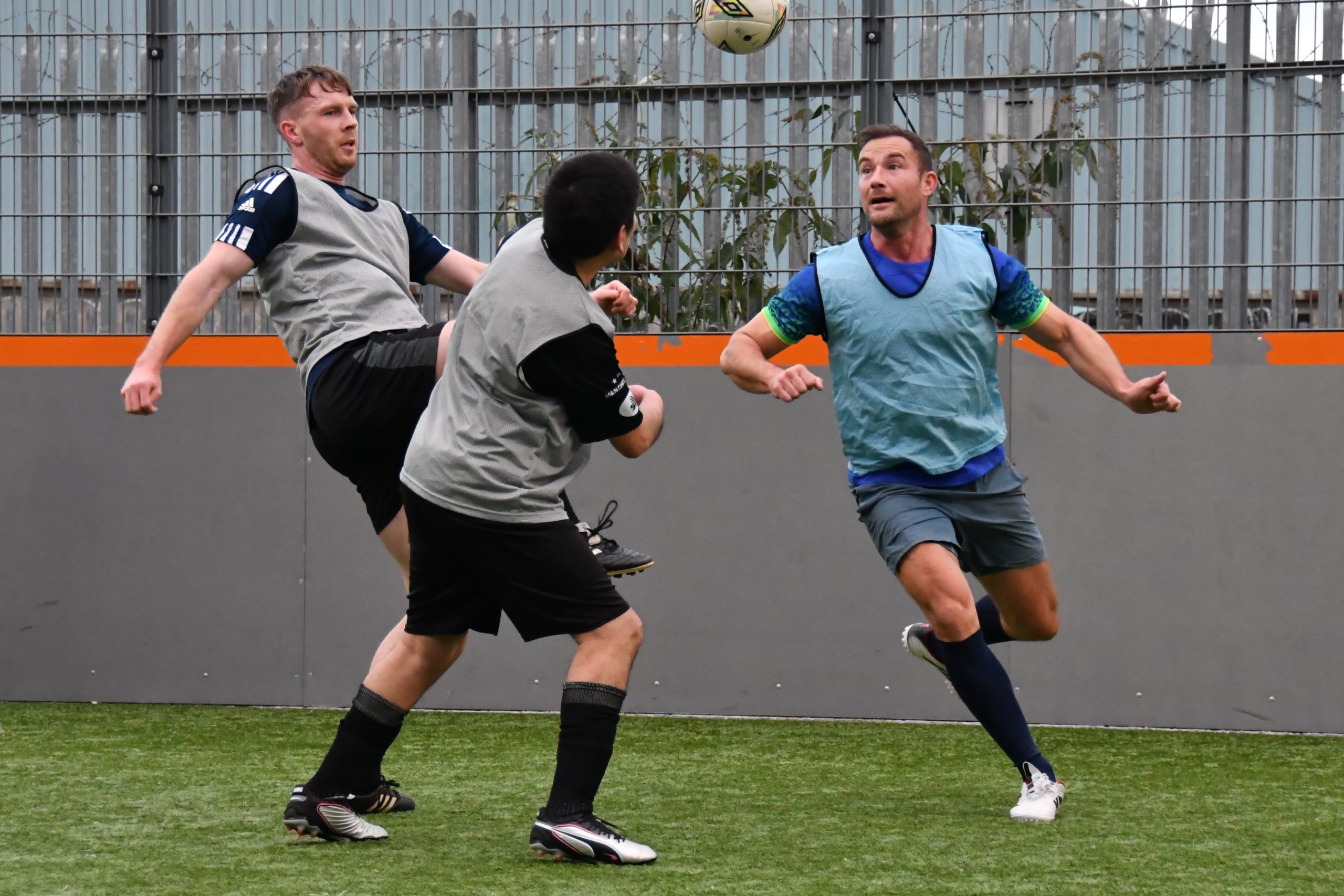
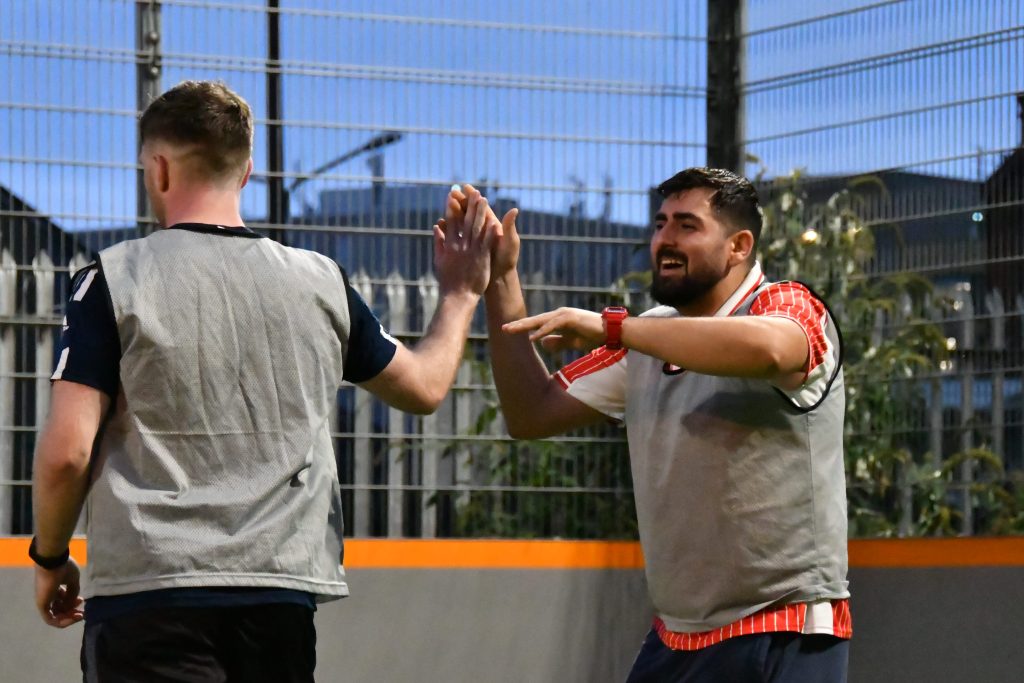
Fig. 1: Participants celebrate during a ‘pick-up’ football game, as part of the Smart D8 Pilot ‘D8 Astro Football’ (2025) led by Football Cooperative. Source (Fig. 1 and Feature Image): Football Cooperative CLG (2025).

2025 Impacts at a Glance

  • Reached milestone of 21,500+ citizens in Smart D8’s first five years through established connections with community organisations and direct pilot engagements – representing over 40% of Dublin 8’s population
  • Launched fifth annual Pilot Call across Positive and Healthy Ageing, Community, and Connected Patient in the Community, with 10% international proposals received
  • Selected and delivered three breakthrough pilots focusing on cancer detection, heart failure management, and men’s health through community football
  • Welcomed Ana Coughlan as Smart D8 Community Coordinator in collaboration with The Liberties Community Project, strengthening engagements with local organisations across Dublin 8
  • Delivered 37 community wellbeing initiatives through 15 new community-organisation collaborations, reaching an additional 400+ participants where people live, work and learn
  • Expanded co-design capabilities through collaborations with multinationals, including Boehringer Ingelheim and Vhi Healthcare, embedding citizen-led innovation in digital health
  • 100+ registered attendees at Smart D8’s third-ever showcase event, showcasing 2024–2025 pilot projects’ innovation journeys and ongoing community engagement activities
  • Recognised nationally with MoveAhead as the overall winner for Citizen Engagement at the Ireland eGovernment Awards 2025
  • Further increased visibility through 6,900+ new website visitors, 30,000+ social media impressions and 15,000+ members reached, and growing

2025 marked a defining year for Smart D8 as Dublin 8’s place-based population health demonstrator, bringing innovators and citizens together to demonstrate and validate innovations to tackle real-world community health and wellbeing challenges at scale. We launched our fifth consecutive pilot call, reaching over 40% of the local Dublin 8 community in the first five years. We selected three game-changing pilots: AI technology helping GPs detect cancer earlier, remote monitoring empowering citizens to self-manage heart failure at home, and football bringing men together for better social and mental wellbeing. 400+ residents took part in accessible wellbeing programmes — from International Women’s Day workshops to nature-based learning for schoolchildren — while 100+ registered attendees for our annual showcase to connect, learn, and build what comes next. With new capabilities expanded in co-design with collaborations with multinationals such as Boehringer Ingelheim and Vhi Healthcare, Smart D8 is not just pioneering new cross-sector collaborations with citizens for community health; we’re building the blueprint for population health transformation across Dublin 8, Ireland and beyond.

Validating Solutions for Real-World Impacts

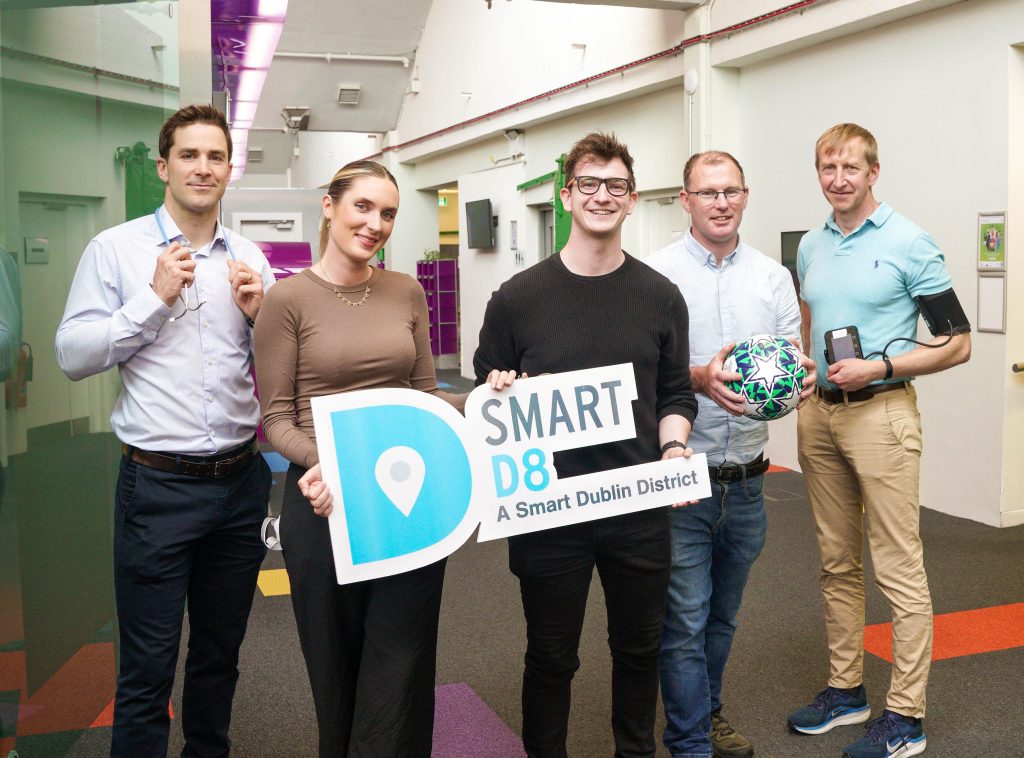
Fig. 2: Pilot representatives convene for the winners announcement of the Smart D8 Pilot Call 2025. (L—R): Conor Murphy (General Practitioner and Aspire Clinical Research Fellow at RCSI University of Medicine & Health Sciences); Ana Coughlan (Community Coordinator at Smart D8); Dr. Jack Lehane (Ecosystem Manager at Smart D8); Steven O’Connell (CEO and Founder at Football Cooperative); and Eamonn Costello (CEO and Co-Founder at patientMpower). Smart D8 selection also includes Eimear Kelly (Digital Health Solutions Specialist at patientMpower). Picture by Beta Bajgartova (2025).

Fifth Pilot Call Breaks New Ground

Smart D8’s fifth Pilot Call reinforced Dublin 8’s role as the go-to place-based demonstrator for validating health and wellbeing innovations that can work with the community at scale, attracting a broad range of applications (10% international) from industry innovators, academic thought leaders, public body visionaries and community changemakers. Following screening, review panel scoring and validation interviews, three pilots moved from proposed concepts to real-world delivery.

🎯 Pilot 1: LISTEN — AI That Helps GPs Spot Cancer Earlier
LISTEN (Leveraging an AI Scribe Tool to Detect Early Non-Specific Symptoms of Cancer) by the PRiCAN research group at RCSI University of Medicine and Health Sciences, developed and deployed an AI-supported ‘non-specific symptoms’ approach across four GP practices and 554 consultations — prompting clinicians on potential subtle cancer indicators (such as appetite loss, fatigue, vague abdominal pain) and helping ensure subtle cancer symptoms don’t go unnoticed.

💙 Pilot 2: Smart Heart — Remote Monitoring That Keeps Patients Safe at Home
Smart Heart by PatientMpower, in collaboration with St James’s Hospital Heart Support Unit, supported citizens to measure and transmit real-time blood pressure and weight data through remote monitoring — demonstrating how citizens living with heart failure can stay home safely while clinicians can gain insight into important bioindicator changes for early intervention.

⚽ Pilot 3: D8 Astro Football — Where Kickabouts Become Health-Changing
Using a simple yet powerful hook of ‘pick-up’ football, D8 Astro Football by Football Cooperative engaged 159 citizens through informal, community-led games at three Dublin 8 locations across 11 game nights. Supported by enterprise-academic collaborations with South East Technological University and University College Dublin, the pilot co-designed an Ecological Momentary Assessment (EMA) framework that captures real-time mood, stress and wellbeing data before and after games, supporting a Social Return on Investment (SROI) framework for scale-up.

Community in Action: 400+ Residents and Wellness To Last

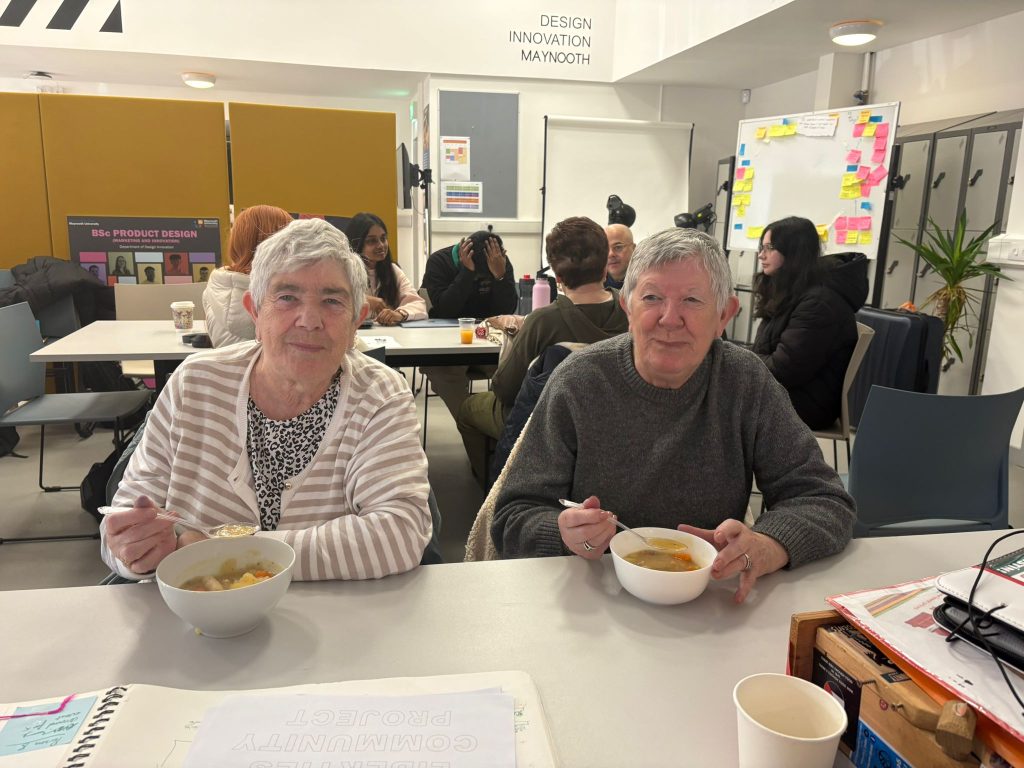
Fig. 3: Participants share a moment during a co-design project at the Department of Design Innovation, Maynooth University, in collaboration with Smart D8, The Liberties Community Project and the local Dublin 8 community. 

Smart D8 also delivered a range of inclusive wellbeing initiatives that reached an additional 400+ residents across 2025, designed to meet people where they are — schools, community centres, festivals and local spaces. Early in the year, health weeks reached 100+ students and teachers, followed by a Love Your Heart event supporting physical and mental wellbeing, and a Women’s Wellness series engaging 99 women through workshops spanning bone health, pregnancy, menopause and breast cancer recovery.

As we saw our pioneering team member, Giulia Camera, progress to exciting new horizons and open doors for new collaborations in her next chapter, the stellar appointment of Ana Coughlan as Smart D8 Community Coordinator in May, in collaboration with The Liberties Community Project, further transformed Smart D8’s capacity to listen and respond. Paving new paths for the latest programme evolution, active local outreach engaged an additional 15 key organisations and carried out a range of initiatives, including conducting focus groups that helped surface critical themes around isolation and service gaps, coordinating extensive community wellbeing initiatives in Dublin 8 and carrying out tailored community engagement activities for continued participation.

Summer and autumn sustained the momentum through Culture Date with Dublin 8’s Louder Voices songwriting and wellbeing activities, in addition to Dublin City Council summer camp workshops reaching 63 children, and festival sessions engaging 45 community members through accessible movement and wellbeing classes. Workplace wellness and healthy eating workshops further broadened participation, demonstrating that accessible, culturally responsive health initiatives can further lasting impact when carried out with the local community for healthier futures.

Alongside delivery, Smart D8’s community engagement in 2025 generated a strong evidence base through surveys, participant feedback and focus groups, identifying physical activity, nutrition and stress management as key priorities, with accessibility and social connection emerging as critical enablers of wellbeing. Feedback indicated tangible impact, with 60-70% of participants intending to maintain higher activity levels and over 80% expressing interest in continuing these activities regularly. These insights continue to inform Smart D8’s co-design approach and pilot validation processes, ensuring innovation remains grounded in lived experience and responsive to community need.

Growing the Movement

Fig. 4: Helen Gaynor (Head of Community Support Services at the Irish Heart Foundation) presents the citizen-engaged innovation journey of the Smart D8 Pilot ‘Heart of Our City’ (2021), as part of Vhi’s annual CXM Innovation Day at The Digital Hub in April. Additional pilot speakers included Dr. Johann Issartel (Co-Founder and CEO at MoveAhead), Sonia Neary (CEO and Co-Founder at Wellola), and Stephen McPeake (Founder and CEO at Civic Dollars).

In 2025, Smart D8 strengthened its role as a connector, expanding its co-design capabilities with collaborations with multinationals including Boehringer Ingelheim and Vhi Healthcare. In April, Smart D8 supported Vhi’s annual CXM Innovation Day at The Digital Hub by showcasing lessons from previous pilot innovators — MoveAhead, the Irish Heart Foundation, Wellola and Civic Dollars — demonstrating how place-based collaboration helps move ideas toward implementation to deliver meaningful, validated digital health solutions and help citizens live longer, stronger and healthier lives.

In May, Smart D8 collaborated with Boehringer Ingelheim, The Digital Hub, Tyndall National Institute and local Dublin 8 organisations to explore how everyday digital devices such as smartphones, smartwatches and smart rings could help support more personalised and equitable approaches to health and wellbeing. Commenced with a multi-workshop co-design series, the collaboration explored potentials for citizen-led co-design on digital biomarkers using wearable technology, engaging residents, workers and students — opening new doors for a more responsive and inclusive digital health future.

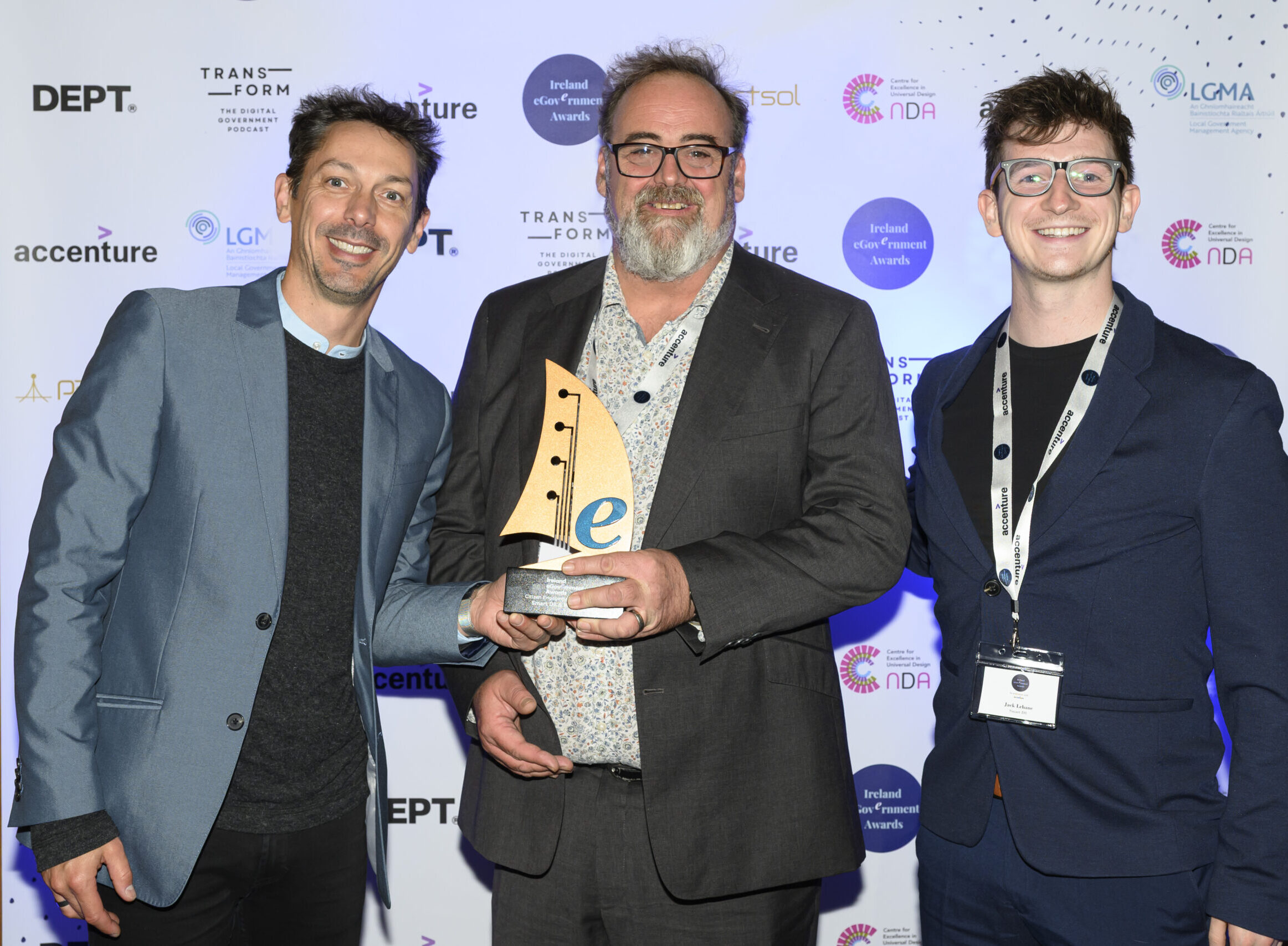
In September, MoveAhead and Smart D8 were recognised as overall winner for Citizen Engagement at the Ireland eGovernment Awards 2025. The awards ceremony took place on Thursday 18th September at UCD O’Reilly Hall, Belfield. The guest of honour at the Awards ceremony was Minister Jack Chambers TD, Minister for Public Expenditure, Infrastructure, Public Services, Reform and Digitalisation, who joined on behalf of An Taoiseach.

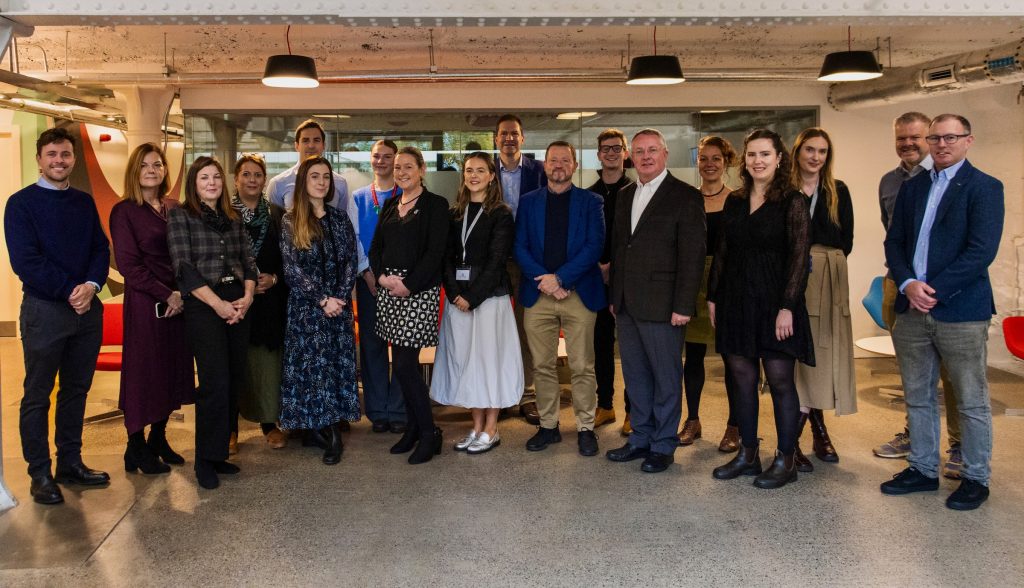
Fig. 5: Smart D8 Consortium representatives and 2024—2025 pilot speakers convene at the Smart D8 Showcase Event in October. Picture by Josue Alejandro Pena Argueta; The Liberties Training Centre (2025).

In October, Smart D8’s third in-person showcase brought together 100+ registered attendees across all sectors for presentations, roundtables and networking, demonstrating increased impact measures while expanding the engagement infrastructure and evidence base for validating the next-generation population health innovations to scale in Dublin 8 and beyond.

What’s Next: Your Invitation to 2026

As our programme moves into 2026, Smart D8 looks forward to building on this momentum with new collaborations and initiatives, and fresh opportunities for you to get involved — to help validate innovations that can drive lasting, measurable change in population health and wellbeing. Want to be part of Dublin 8’s health innovation story? If you haven’t already, here’s how:

Thank you for being part of Smart D8’s remarkable 2025 journey. We are excited for what 2026 will offer. And we’re just getting started…

Smart D8 Showcase 2025 Highlights Innovation in Population Health

Smart D8 Showcase 2025 Highlights Whole-of-Society Innovation in Population Health


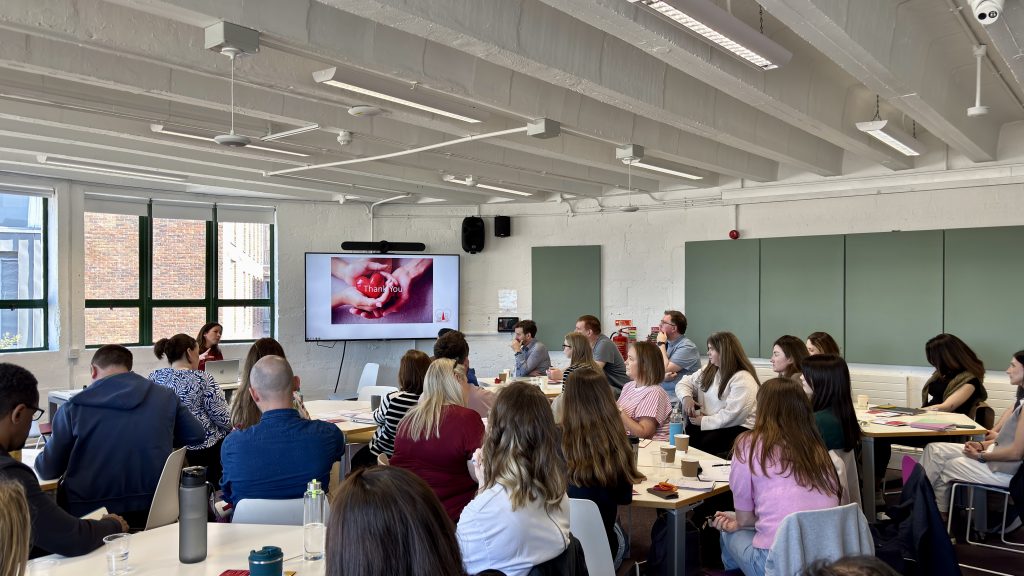
The recent Smart D8 Showcase brought together innovators, researchers, community partners and entrepreneurs to explore the future of population health and wellbeing. This year’s edition was hosted in the Digital Depot at The Digital Hub, spotlighting pioneering pilot projects and initiatives tackling real-world health challenges in the heart of Ireland’s capital city.

Smart D8, Dublin’s first smart district dedicated to addressing community health in the heart of Dublin 8, is a population health demonstrator committed to improving the wellbeing of nearly 45,000 citizens living, working and studying in Dublin 8. It provides opportunities for innovators to collaboratively demonstrate innovative content and technology to enhance population health outcomes locally and beyond.

This year’s showcase featured presentations and roundtables from 2024–2025 pilot project leaders, ranging across themes such as heart health, men’s health and early-stage cancer detection. Highlights of the first panel, “Piloting Next-Generation Population Health,” included:

  • PRiCAN Research Group at RCSI University of Medicine and Health Sciences, for LISTEN (Leveraging an AI Scribe Tool to Detect Early Non-Specific Symptoms of Cancer) — prompting clinicians on early cancer indicators, helping ensure subtle cancer symptoms don’t go unnoticed
  • patientMpower in collaboration with St James’s Hospital Heart Support Unit, for the Smart Heart initiative — supporting citizens’ remote monitoring for biomarkers associated with heart failure progression
  • D8 Astro Football by Football Cooperative CLG in collaboration with Dublin City Council — developing a Social Return on Investment (SROI) framework for men’s health with partners such as South East Technological University, University College Dublin, Local Sports Partnerships and the Football Association of Ireland (FAI)
  • Ongoing Smart D8 community engagement initiatives — led by Smart D8 Community Coordinator, Ana Coughlan, and core collaborators such as The Liberties Community Project

The second panel, “Beyond Pilots – Scaling Outcomes, Lessons and Learnings,” brought together key roundtable speakers for post-pilot impacts from 2024, including initiatives from Kids Speech Labs, Dublin Simon Community, CP-Life Research Centre at RCSI, and Outlandish Theatre (OT) Platform in collaboration with the Global Brain Health Institute (GBHI) and Trinity College Dublin.

The event ended with an engaging networking session, fostering continued collaboration across the Smart D8 partnership, collaborators, and extended innovator and community networks; all committed to driving next-generation innovations in population health and wellbeing.

By fostering connections between citizens and service-providers, Smart D8 presents a unique opportunity for innovators to explore how innovative content and technologies can collaboratively improve health and wellbeing with an urban population. Smart D8 is looking to engage and collaborate with enterprises, academic institutions, and public and private sector organisations who wish to market validate their solutions with the local community to demonstrate measurable impacts on social and economic determinants of health to scale.

Smart D8’s achievements have earned widespread recognition, including HealthTech Innovation of the Year finalist (Public Sector Digital Transformation Awards 2023), Innovation in Public Administration (EPSA 2023-24), Digital Community finalist (.ie Digital Town Awards 2024), and overall Citizen Engagement winner with MoveAhead (eGovernment Awards 2025).

Registrations Now Open for Smart D8 Showcase 2025

Registrations Now Open for Smart D8 Showcase 2025


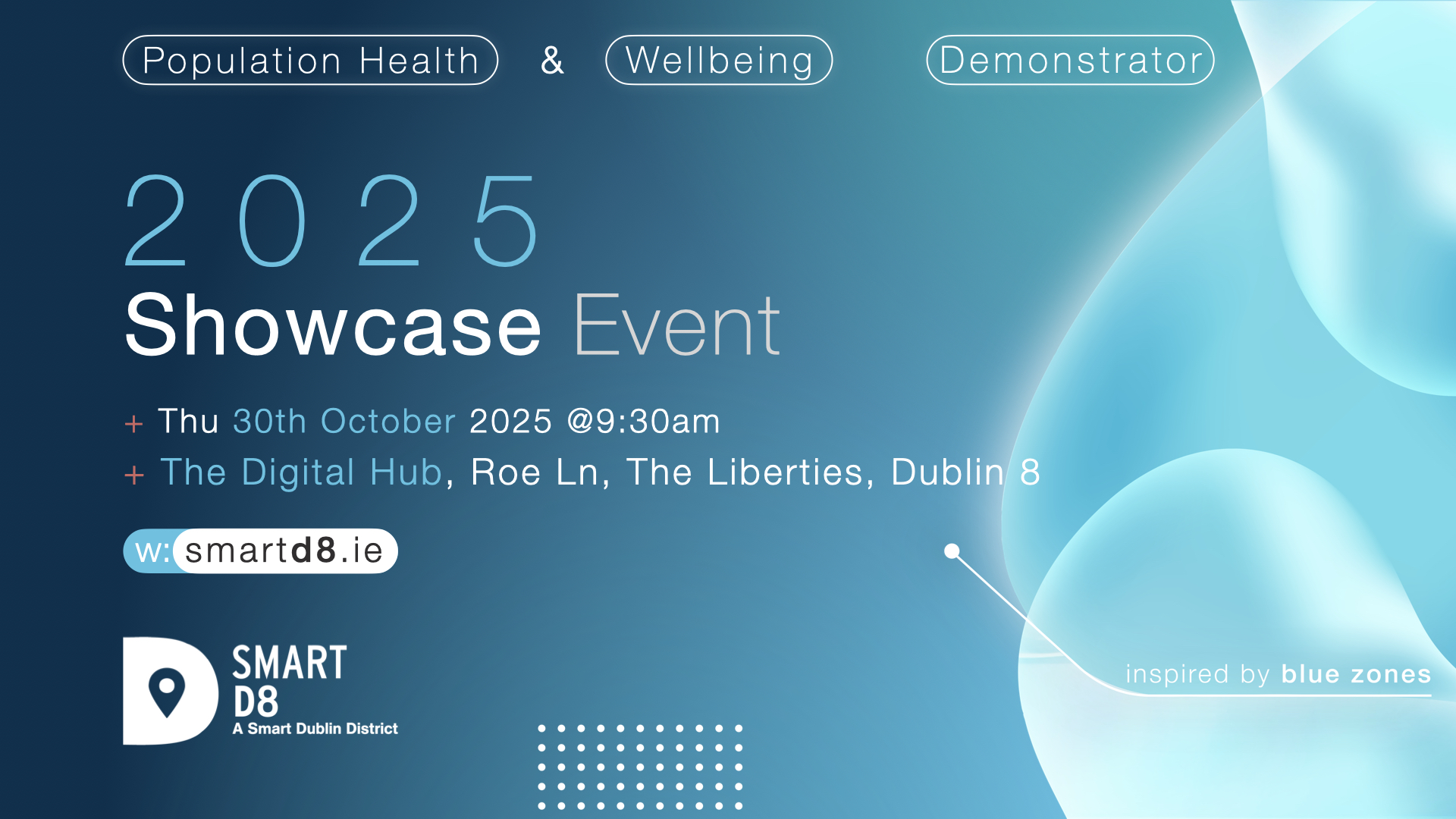
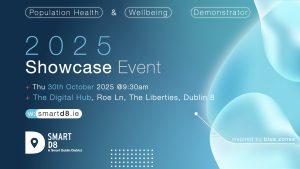
Registration is now open for Smart D8’s annual Showcase Event, scheduled for Thu 30th October 2025 at the Digital Depot at The Digital Hub (Bay 01), Dublin 8! Join us for a morning filled with innovative talks, inspiring roundtable and networking opportunities. Discover the latest advancements in population health and wellbeing and how they are shaping the future. Whether you’re an industry professional, entrepreneur, researcher, healthy communities advocate or simply a health enthusiast curious about what’s next, this event is perfect for you. Get ready to be witness what the future holds at the Smart D8 Showcase 2025.

The Smart D8 Showcase is an in-person event; to hear more about the latest Smart D8 pilot projects’ innovations in population health and wellbeing, ranging across themes including (but not limited to) heart health, men’s health, and early-stage cancer detection. The showcase will give attendees an opportunity to:

  • Learn about the collaboration from across 12 different public-facing organisations as part of the Smart D8 consortium.
  • Experience the innovations happening through presentations from 2024 and 2025 Smart D8 pilot representatives.
  • Meet Smart D8’s networks and collaborators, and explore future collaboration opportunities.

Panel 1 : Piloting Next-Generation Population Health (2025)
[ Format : Presentation + Q&A ]

  • A: Early-Stage Cancer Detection, by RCSI University of Medicine and Health Sciences | Speakers: Catherine Devereux, Artificial Intelligence Research Scientist and Dr. Conor Murphy, General Practitioner and Aspire Clinical Research Fellow at RCSI University of Medicine & Health Sciences
  • B: Smart Heart, by PatientMPower in collaboration with St James’s Hospital | Speaker: Eimear Kelly, Digital Health Solutions Specialist at patientMpower
  • C: D8 Astro Football, by Football Cooperative CLG | Speaker: Steven O’Connell, CEO and Founder at Football Cooperative CLG
  • D: Smart D8 Community Engagement, by Smart D8 and collaborators incl. The Liberties Community Project (TLCP) | Speaker: Ana Coughlan, Community Coordinator at Smart D8
  • Group Panel Q&A

Panel 2 : Beyond Pilots – Scaling Outcomes, Lessons and Learnings (2024)
[ Format : Roundtable // Shared Q&A ]

  • A: Kids Speech Labs, by Kids Speech Labs Ltd. | Speaker: Dr. Shona D’Arcy, Founder at Kids Speech Labs
  • B: Digital Medication Management System, by Dublin Simon Community | Speaker: Samantha Makiwa, Senior Manager in Clinical Governance & Therapeutic Services at Dublin Simon Community
  • C: Access Information Map, by CP-Life Research Centre at RCSI | Speaker: Dr. Jennifer Fortune, Senior Research Fellow & Research Programme Lead at CP-Life Research Centre at RCSI 
  • D: Brain Health, by Global Brain Health Institute (GBHI)/Trinity College Dublin in collaboration with Outlandish Theatre (OT) Platform | Speaker: Maud Hendricks, Artist and Co-Director at Outlandish Theatre (OT) Platform

The event will include presentations from Smart D8 partners and the latest cohorts of pilots, panel roundtable discussions and Q&A, and conclude with on-site networking opportunities.

Register via Eventbrite Here: https://www.eventbrite.com/e/smart-d8-showcase-2025-tickets-1737599449729

See some of our 2023 Showcase Event below!

Smart D8 x MoveAhead Overall Citizen Engagement Winner at eGovernment Awards 2025


Smart D8, in collaboration with MoveAhead, were nationally recognised as overall Citizen Engagement winner at the Ireland eGovernment Awards 2025.

Led by Jamie McGann and Johann Issartel, MoveAhead is the world’s first AI-powered and movement analytics platform built specifically for children. One of four Smart D8 pilots from 2023 and an ADAPT-DCU spin-out, MoveAhead brought its movement-based app and games to schools and after-schools in the Dublin 8 community to co-design a “Smart Moves” curriculum, to tackle the sedentary crisis in childhood in the digital age. Through the Smart D8 pilot, MoveAhead’s community outreach was able to engage a range of local schools and after schools partnerships in Dublin 8 such as The Liberties Community Project (TLCP — formerly SICCDA; South Inner City Community Development Association) to co-design and deliver a movement curriculum for children’s motor skills. In doing so, MoveAhead identified an underutilised space for engaging with citizens to achieve health and social impacts outside of traditional healthcare settings, it equipped teachers and carers with the tools to measure childhood movement, and it empowered over 500 children and their families to co-develop their own movement curriculum which led to measurable improvement in their movement skills to improve their health and wellbeing.

Findings and teacher feedback demonstrated that consistent delivery of the physical literacy programme can drive lasting improvements in children’s motor skills. In terms of health, it delivered measurable improvements in children’s motor competence and boosted confidence in physical activity. The programme advanced equity by reaching underserved communities through Smart D8, The Digital Hub pilot champion, and trusted local partners such as The Liberties Community Project. It promoted digital inclusion with GDPR- and KidSafe-compliant tools that encouraged active, not passive, screen use — with raw data of movement anonymised by default; setting a new precedent for responsible data management. The project also proved highly scalable, continuing to grow through subsequent partnerships and stakeholders in the education sector: https://libertiesdublin.ie/d8-kids-moving-ahead

The awards ceremony took place on Thursday 18th September at UCD O’Reilly Hall, Belfield. The guest of honour at the Awards ceremony was Minister Jack Chambers TD, Minister for Public Expenditure, Infrastructure, Public Services, Reform and Digitalisation, who joined on behalf of An Taoiseach.

Smart D8 Population Health Survey Series

How can people have more say in improving health and wellbeing in their communities?

This question is at the heart of a community-focused project led by The Digital Hub and Tyndall National Institute through the Smart D8 partnership, Boehringer Ingelheim, and local organisations in Dublin 8.

This project explores whether everyday digital tools, such as smartphones, smartwatches and smart rings, can support more personalised and fair approaches to health and wellbeing.

What better way to gather people’s views and understand the real challenges of everyday life than to survey the population of Dublin 8. The Dublin 8 community is already leading the way in improving health and wellbeing.

Including people who live, work and study in Dublin 8 helps build a clear picture of health and wellbeing needs. We hope to understand preferences around digital devices,  learn about the general health and wellbeing needs of our local community, and explore opportunities for more effective and personalised public health supports through wearable technologies. It has been designed to be inclusive, simple and anonymous. It can help shape future projects, such as where people may choose to share anonymous health data from their devices to help find early signs of health issues (“digital biomarkers”) and improve health outcomes.

By participating, you’ll help us build a more responsive and inclusive digital health future — starting in Dublin 8.
_________________________

To participate, please click here.