
2026 Pilots Selected for Connected Care, Healthier Food Choices and Financial Wellbeing
Smart D8 selects three 2026 pilot projects seeking participation in connected care, healthier food choices and financial wellbeing
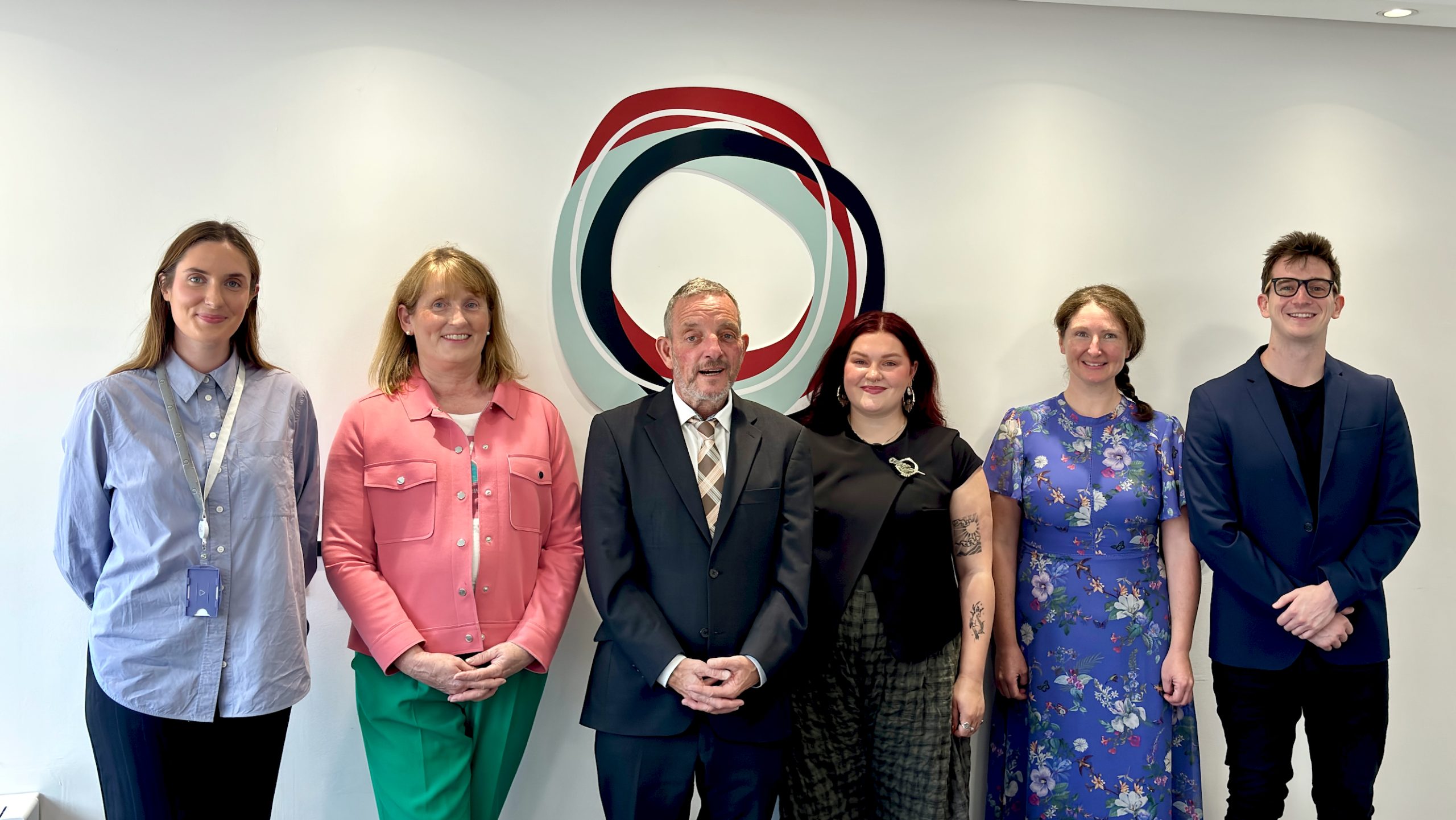
(L—R) Ana Coughlan (Community Coordinator at Smart D8); Deirdre McCarthy (CEO at AllSkills Education CLG); Mr. Jerry Buttimer T.D. (Minister of State at the Department of Rural and Community Development and the Gaeltacht and the Department of Transport); Maddie Hawk (Service Innovation Lead at St James’s Hospital); Dr. Martina Rooney (Research Programme Manager and Nutrition Scientist at the Co-Centre for Sustainable Food Systems at University College Dublin); Jack Lehane (Ecosystem Manager at Smart D8). Picture by The Digital Hub Development Agency (2026).
Marking the sixth year of Smart D8’s support for community-engaged approaches to wellbeing, the latest pilot selection reflects priority areas identified through local outreach activities in 2025. The 2026 pilot projects focus on reducing social isolation and deterioration among older adults, building shared understanding of sustainable nutrition, and addressing the impact of financial stress on mental wellbeing.
The pilot selection announcement comes following a state visit by Mr. Jerry Buttimer T.D. (Minister of State for Community Development, Charities and Rural Transport at the Department of Rural and Community Development and the Gaeltacht and the Department of Transport) to The Digital Hub in Dublin 8 on Tuesday 28th July, as Smart D8 continues its broad programme of work to engage meaningfully with the Dublin 8 community for locally relevant and transferable approaches to health and wellbeing.
The 2026 pilot projects beginning their engagement across Dublin 8 this summer are:
- Connected Care by St James’s Hospital, in collaboration with IntuVu Health: Led by Maddie Hawk, this pilot aims to reduce the risk of social isolation and deterioration among older adults returning home after discharge from the Emergency Department. Through the IntuVu digital support app, participants will receive personalised wellbeing check-ins, mood and activity prompts, two-way communication with caregivers and clinical teams, and connections to local social prescribing supports. A ‘Helper Mode’ will also enable a family member, friend or carer to assist participants with limited digital skills, helping to identify changes in wellbeing earlier and support independence and healthy ageing.
- Family Food Lab by the Co-Centre for Sustainable Food Systems: Led by Dr Martina Rooney of University College Dublin and Louise Rice of Queen’s University Belfast, Family Food Lab will engage children and adults to explore the relationship between food, health and the environment. Informed by the wider Household Food and Health Study, interactive workshops will translate sustainable food-systems research into accessible activities that support healthier, more sustainable diets and build shared understanding of the factors shaping food choices with the community. A digital family resource will support continued learning, with community packs made available for local venues, lower-income families and underserved groups.
- FLIT Financial Literacy by AllSkills Education CLG: Led by Deirdre McCarthy, this pilot aims to address the effects of financial stress on mental wellbeing, social connection and working life, particularly among women with families and people in small or informal workplaces. FLIT Financial Literacy will deliver a structured financial wellbeing programme in Dublin 8, combining a multi-week peer-learning workshop series with a personalised digital toolkit. Through practical financial education, digital resources and wellbeing check-ins, participants will be supported to access trusted information and track progress, while increasing understanding of how financial literacy can support mental and social wellbeing outcomes over time.
The pilot strand of the Smart D8 programme works by selecting a number of health and wellbeing initiatives through a competitive open call. Selected projects are supported with community connections and funding as they meaningfully engage local community networks for their pilot delivery, to co-develop and demonstrate measurable impacts on wellbeing for up to six months. At the end, they are evaluated against these real-world community needs to verify their potential to scale their impacts in Dublin 8 and beyond.
The Smart D8 consortium is led by The Digital Hub, Dublin City Council, St James’s Hospital and Smart Dublin. They are joined by Tyndall National Institute, St Patrick’s Mental Health Services, Trinity College Dublin, Trinity Translational Medicine Institute, National College of Art & Design, the Guinness Enterprise Centre and Health Innovation Hub Ireland in this unique collaborative initiative.