
Your Portal
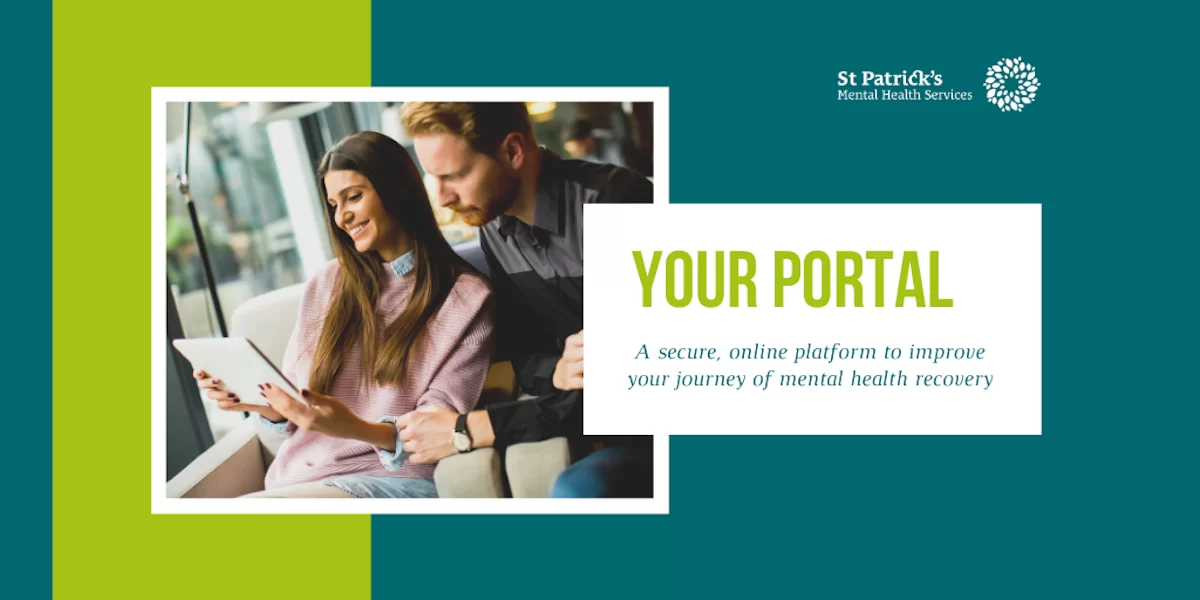
Your Portal (Learnovate & St Patrick’s Mental Health Services)
As part of the Smart D8 pilot programme in 2022, St Patrick’s Mental Health Services (SPMHS) partnered with the Learnovate Centre at Trinity College Dublin to explore how digital patient portals can better support service users in managing their mental healthcare. The pilot focused on understanding how engagement with digital patient portals can be maintained over time, particularly in the context of mental health services where trust, communication and continuity of care are essential.
In recent years, SPMHS has introduced a digital patient portal to provide service users with secure access to information, appointment details and communication tools. While patient portals are increasingly common across healthcare systems, their effective use within mental health settings is still emerging. The Smart D8 pilot responded to this challenge by examining international evidence on patient portal use and identifying insights relevant to supporting meaningful, sustained engagement among service users.
Working closely with SPMHS, Learnovate conducted an in depth review of existing research on patient portals across a range of healthcare contexts, including mental health. The study explored how digital portals can support patient activation, improve communication between service users and healthcare professionals, and enable people to take a more active role in managing their care. Particular attention was given to understanding how design, communication and professional engagement influence whether service users feel confident and motivated to use digital tools.
The findings highlighted the growing role of patient portals in supporting people-centred care. Evidence from international studies showed that when effectively implemented, digital portals can improve access to information, support medication adherence, reduce missed appointments and strengthen communication between patients and healthcare professionals. In mental health settings, patient portals were found to offer additional value by supporting self-management, improving transparency and enabling service users to engage with care in a way that suits their own pace and circumstances.
The pilot also reinforced the importance of trust and human connection in digital healthcare. Research consistently showed that service user engagement is strongest when digital tools are supported by clear communication, encouragement from healthcare professionals and access to real people when support is needed. In this way, technology acts not as a replacement for care relationships, but as an enabler of stronger partnerships between service users and clinicians.
By grounding the research in the lived realities of mental healthcare delivery, this pilot provided SPMHS with valuable insights to inform the ongoing development of its digital patient portal. The work helped strengthen understanding of how digital tools can support empowerment, autonomy and continuity of care while remaining sensitive to the unique challenges of mental health services.
This pilot also demonstrated how cross sectoral collaboration can generate practical, evidence informed insights that support innovation in care delivery. By focusing on engagement, accessibility and partnership, the project contributed to the development of digital healthcare approaches that are more inclusive, supportive and responsive to the needs of service users.