
Solas VR
Solas VR
In recent years, communities across Dublin 8 have faced increasing pressure on their mental wellbeing. Local service providers working with young people, older residents and vulnerable groups observed a pattern that became especially visible during and after the Covid-19 pandemic: despite a strong need for stress reduction support, many community members were not engaging with existing wellbeing or therapeutic services. Barriers ranged from stigma and routine to simple access issues, all magnified by periods of isolation and changing work and social patterns. It became clear that new, accessible and non-intimidating approaches to mental wellbeing were needed – approaches that could reach people who might never walk into a traditional mindfulness class or counselling session.
It was in this context that the SolasVR pilot emerged. The project set out to explore whether immersive Virtual Reality meditation could widen the doorway into wellbeing for groups who often fall through the cracks of conventional services. Far from being a tech gimmick, the idea was grounded in a simple principle: if people could be transported, even briefly, to calming, nature-rich environments, they might find relaxation more intuitive, and mindfulness less abstract or daunting.
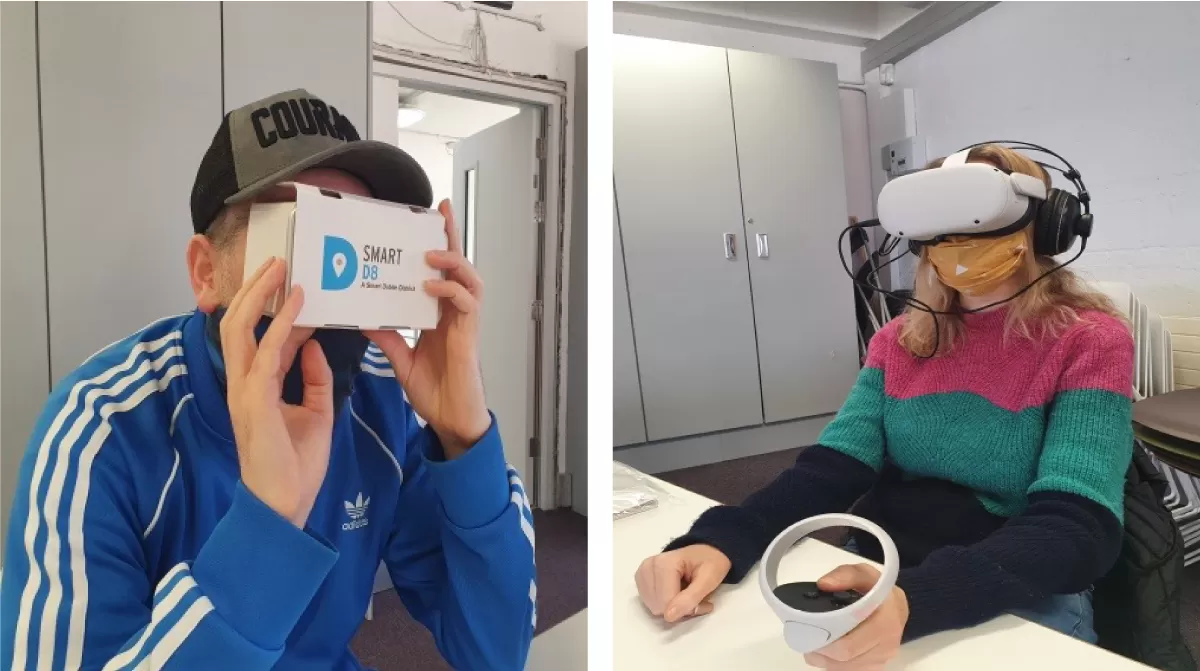
The pilot was delivered through the Smart D8 2022 Pilot Call, with organisations embedded deeply in the Dublin 8 community, including the Solas Project, Fatima Group, SWICN and RECDP. In each setting, small group sessions introduced staff and community members to SolasVR’s Wellness App. Participants were guided through tranquil VR environments and gentle meditation exercises, offering an experience that combined escapism with structured relaxation. The technology was deliberately easy to use, designed to welcome those with little or no experience of meditation. For many, it was their first encounter with VR – and, often, their first experience of mindfulness presented in a way that felt playful rather than clinical.
Workshops with stakeholders explored a range of potential applications. Social prescribing emerged as a strong opportunity, with practitioners identifying how VR could act as a bridge for clients hesitant to try more formal therapeutic routes. The pilot also tested both in-person and home-based models, including the option of using Google Cardboard headsets, widening accessibility for those unable to attend group sessions. Ideas quickly multiplied: from group relaxation classes to supporting hard-to-reach clients to strengthening routine wellbeing practices within local organisations.
The early outcomes were strikingly positive. Staff in every participating organisation immediately recognised practical uses for VR meditation within their services. Participants across a wide age range described the experience in vivid and personal terms: one older user, immersed in a virtual landscape, said it “felt really healthy, as if I was walking in Glendalough on a sunny day – forgot that I need two new knees!” Others spoke of feeling calmer, more grounded, or surprised by how immersive and restorative the experience was. Most said they would recommend the tool to others, expressed interest in trying it at home and wanted access to more VR wellbeing content.
Perhaps the most encouraging finding was the sense that VR made mindfulness approachable for people who had previously struggled to connect with it. Simulated nature played a significant role, suggesting that VR could offer a form of digital “green space” to residents who may have limited access to restorative environments in their daily lives. As the pilot progressed, its potential applications expanded – from group therapy sessions to structured mindfulness classes to a home-based tool for ongoing stress management.
SolasVR’s work also helped raise awareness among local health practitioners and counsellors about the potential of VR technologies for mental wellbeing. The pilot served as a demonstration of how innovative digital tools, when rooted in community partnerships, can open up new avenues for care. It showed that technology can lower barriers, spark curiosity and create gentle, meaningful moments of calm – especially for those who may not otherwise seek support.