
Portasana® Care Journeys
Portasana® Care Journeys
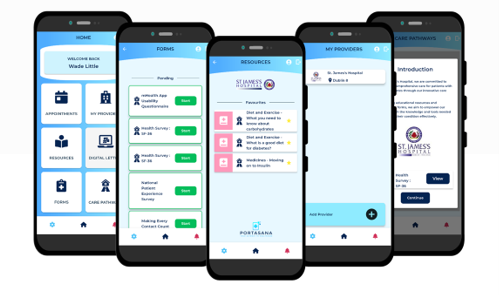
As part of the Smart D8 2024 pilot programme, St James’s Hospital Dublin partnered with Wellola to pilot Portasana, a digital patient facing care pathway platform designed to support self management for people living with Type 2 Diabetes in Dublin 8. Delivered over a nine week period, the pilot explored how digital care journeys can enhance patient engagement, improve health literacy and support more efficient, person centred healthcare delivery.
Diabetes represents a significant and growing health challenge in Dublin 8, particularly among older populations. By introducing Portasana within the Diabetes Department at St James’s Hospital, the pilot aimed to empower patients with accessible, tailored information while supporting clinicians to deliver care in a more streamlined and proactive way. Through the platform, patients were given digital access to educational resources, assessment tools and structured care content that could be completed at their own pace, in their own time, and at home.
During the pilot, 701 patients were invited to participate, with 137 registering on the platform, representing an early uptake rate of 19.54%. While adoption was at an early stage, engagement data showed promising signals of impact. Patients interacted with educational resources focused on practical aspects of diabetes care, including blood testing and medication management, highlighting the value of clear, accessible information in supporting self-management.
Early health and usability outcomes were also encouraging. Patient reported health scores, measured using the SF-36 survey, increased from an average of 96 before engagement with Portasana to 100.5 following the intervention. At the same time, usability scores improved from 101.2 to 108, indicating that patients found the platform increasingly intuitive and supportive as they progressed through the digital care journey. Beyond patient experience, the pilot demonstrated clear potential benefits for healthcare delivery. Portasana enables clinicians to monitor patient responses digitally, support risk stratification and reduce unnecessary follow up appointments. Evidence from other healthcare settings where the platform has been deployed shows a 33% reduction in avoidable hospital appointments, 71% faster questionnaire completion rates and the equivalent of 128 clinical days saved per department each year. These efficiencies point to the wider system level impact that digital care journeys can deliver as adoption scales.
Scalability was a central outcome of the pilot. While initially focused on Type 2 Diabetes, Portasana is designed as a modular platform that can be adapted for other diabetes pathways, including Type 1 Diabetes and Diabetic Foot care. There is also strong potential to extend the model across additional specialties at St James’s Hospital, such as Oncology, Dermatology, IBD and other chronic disease services, replicating benefits already demonstrated in other health systems.
The pilot also highlighted the role digital platforms can play in supporting sustainability within healthcare. By reducing reliance on paper documentation and minimising unnecessary patient travel, digital care pathways offer both environmental and cost-saving benefits. At scale, Portasana could contribute to reduced emissions, lower administrative costs and more efficient use of clinical resources across the health system.
Overall, the Portasana Care Journey pilot demonstrated how digital innovation, when grounded in clinical practice and patient needs, can support better self-management, improve engagement and unlock efficiencies in healthcare delivery. By combining personalised digital tools with clinical oversight, the project offers a scalable model for managing chronic disease that aligns with Smart D8’s mission to improve health and wellbeing through collaboration, innovation and community-centred solutions